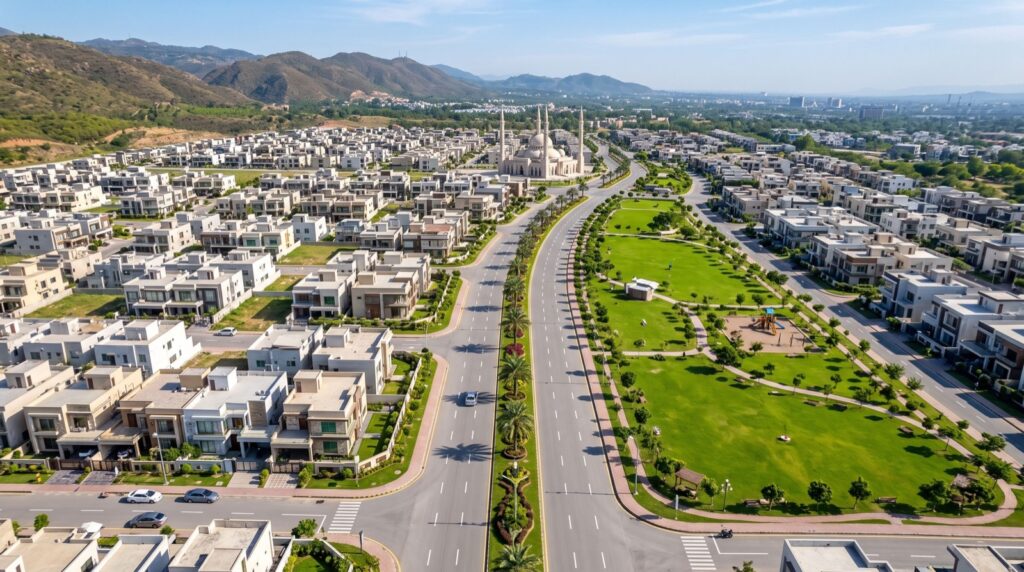
The land market along the Rawalpindi–Islamabad corridor has matured from a speculative playground into one of the most closely watched property arenas in Pakistan. Buyers who once chased any parcel with a boundary wall now ask sharper questions about zoning, approvals, development pace, and the realistic gap between a plot’s file price and the day it can actually be built upon. Housing societies on the southern and eastern edges of Rawalpindi have become a focal point of that scrutiny, because they sit close enough to major road networks and the New Islamabad International Airport to promise convenience, yet remain affordable enough to attract first-time investors.
Understanding how to evaluate a plot in this belt is less about chasing hype and more about learning to read the fundamentals that separate a durable asset from a stalled file. This article walks through the practical framework serious buyers use when weighing a purchase in the twin-cities region, from decoding instalment schedules to matching plot dimensions with a clear investment purpose. The goal is not to promote any single project, but to help you think like a disciplined investor before your money is committed.
Why the Rawalpindi–Islamabad Corridor Attracts Plot Investors
Few regions in Pakistan combine population growth, infrastructure spending, and administrative demand the way the twin cities do. Islamabad remains the seat of federal government, drawing a steady stream of professionals, diplomats, and service-sector workers, while Rawalpindi supplies the commercial energy and denser housing stock. That interdependence keeps demand for residential land structurally high. As the built-up core of Islamabad reaches capacity, expansion naturally pushes outward toward Rawalpindi’s peripheries, where undeveloped land is still available at prices that reward early entrants.
Investors are also drawn by the visibility of public works. Ring roads, interchanges, and the airport have redrawn the map of what counts as a well-connected location. A society that looked remote five years ago can become a fifteen-minute drive from a motorway junction once a link road is completed, and that shift is often what drives the sharpest appreciation in plot values.
Reading a Payment Plan Before You Commit
The single most misunderstood document in the plot market is the instalment schedule. A low headline figure means little if the down payment is steep, the confirmation charges are hidden, or possession is tied to milestones that keep slipping. Before signing anything, map out the full cost of ownership: booking amount, monthly instalments, half-yearly or annual balloon payments, development charges, and any category or corner surcharge. Only then can you compare one project honestly against another.
It helps to study a published schedule line by line, and a clear example such as the Silver city price plan illustrates how a structured society breaks a purchase into manageable tranches while spelling out the extras that casual buyers often overlook. Treat any figure quoted verbally by an agent as unconfirmed until you see it in writing on the official schedule.
Residential Versus Commercial: Matching Plot Size to Goals
Not every plot serves the same investor. Residential plots, typically ranging from three to ten marla in these societies, suit buyers who want a family home or a stable, slower-appreciating asset. Commercial plots, though smaller in footprint, command a premium because they can host shops, offices, or mixed-use buildings that generate rental income far above what a residential unit yields per square foot.
For income-focused investors, compact commercial parcels are often the sweet spot, and listings such as the 4 Marla Commercial Plots show how a modest outlay can secure frontage in a planned market zone. The trade-off is higher entry cost per marla and stricter building regulations, so match the plot category to your holding period and your appetite for active management rather than buying commercial simply because it sounds more lucrative.
Location, Access, and the New Airport Effect
Within any single society, the difference between a plot on a main boulevard and one buried in a back block can be enormous. Corner plots, park-facing plots, and those near the entrance or commercial hub carry premiums for good reason: they are easier to resell and more attractive to end users. When you inspect a site, walk the roads, note the width of the carriageways, and check how close your block sits to promised amenities like the mosque, school, or graveyard.
The airport deserves special attention. Proximity to the New Islamabad International Airport has become a marketing staple, but genuine access depends on the link roads that actually connect a society to the highway network. Verify the route yourself rather than trusting a brochure map, because a straight line on paper can hide an hour of unpaved detour on the ground.
Legal Due Diligence Every Buyer Should Do
No amount of appreciation potential compensates for a defective title. Confirm that the society holds a No Objection Certificate from the relevant development authority, that the specific block you are buying in falls inside the approved layout, and that the land is free of agricultural or litigation encumbrances. Ask to see the approval letters, not just verbal assurances, and cross-check them with the authority’s own records where possible.
Because paperwork and site conditions can be technical, many buyers lean on reliable local experts who understand regional approvals, ground realities, and the practical steps involved when a plot changes hands or a structure must be cleared before construction begins. A short consultation before you sign can save months of frustration afterward.
Timing Your Entry: Pre-Launch, Development, and Possession
Plot prices move through predictable phases. Pre-launch and early booking offer the lowest prices and the highest risk, since you are buying on the strength of a plan rather than visible progress. The development phase, when roads are cut and utilities are laid, tends to bring steady appreciation with reduced uncertainty. Possession-ready plots cost the most but let you build or resell immediately.
Your ideal entry point depends on how much risk you can absorb and how long you can wait. Cautious investors often prefer to enter once earthwork is clearly underway, accepting a higher price in exchange for tangible proof that the developer is delivering.
Building a Resale or Rental Exit Strategy
Buying is only half of a sound investment; knowing how you will exit is the other half. Decide at the outset whether you intend to flip the file during a market upswing, hold for long-term capital gain, or build and rent for recurring income. Each path favours different plot characteristics, from location premium to plot size, and shapes how patiently you should negotiate on entry.
Keep records of every payment, transfer receipt, and society communication, because a clean, well-documented file resells faster and at a better price than one with gaps. In a market where trust is currency, transparency is itself an asset.
Key Takeaways
- The twin-cities land belt appreciates on infrastructure and administrative demand, not hype alone.
- Read the full payment schedule, including hidden charges, before comparing any two projects.
- Match residential or commercial plots to your holding period and income goals.
- Verify airport and motorway access on the ground, not just on brochure maps.
- Confirm NOC status and clean title before releasing any money.
- Choose your entry phase based on your tolerance for risk and time.
Final Thoughts
Plot investment in the Rawalpindi–Islamabad corridor rewards buyers who slow down and do the unglamorous work of verification. Location, legal standing, payment structure, and a defined exit plan matter far more than any single sales pitch. Approach each opportunity as a disciplined analyst rather than an eager speculator, lean on trustworthy advisers when the details get technical, and let the fundamentals guide your decision. Handled that way, a well-chosen plot in this region can be one of the steadier stores of value available to a patient investor.